︁︅︂︅︂︄︄︄︄︂︅︃︃︄︀︂︂︄︄︄
What if amethyst took us on a journey into legendary times?
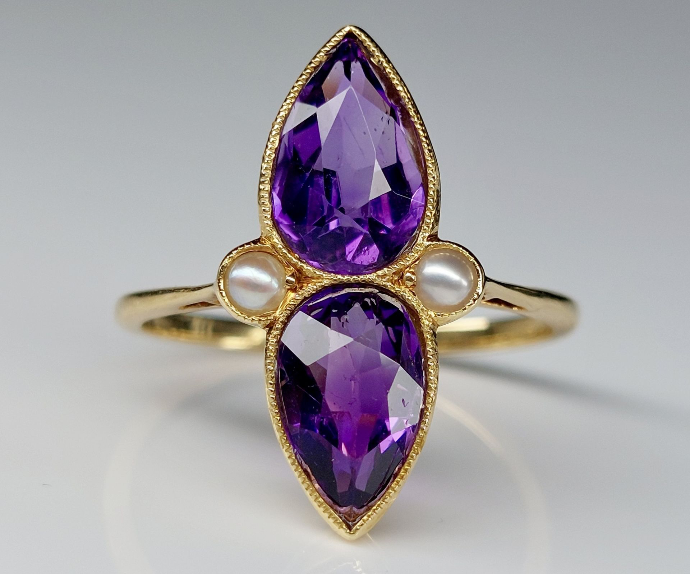
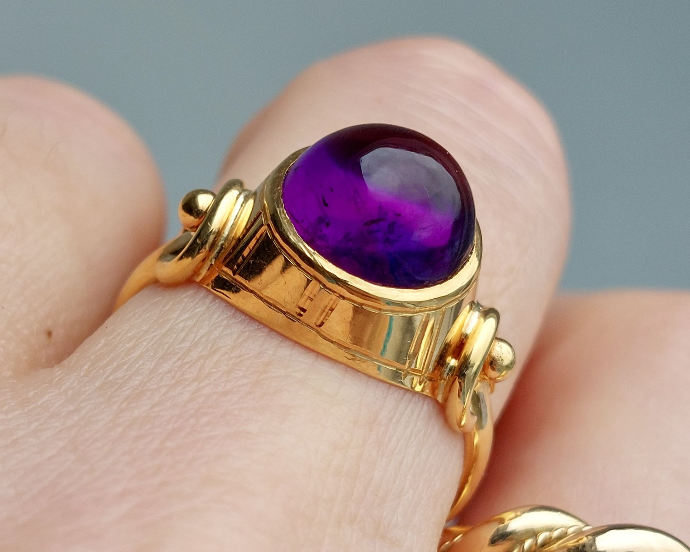
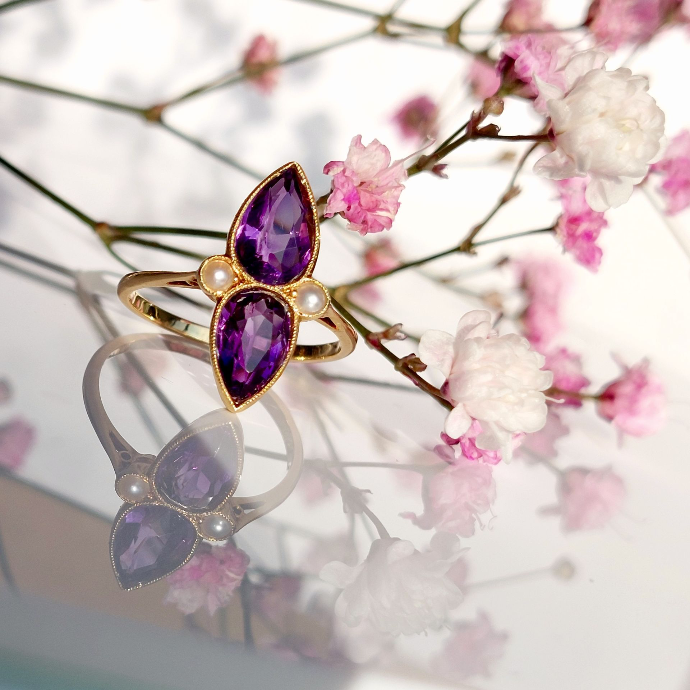
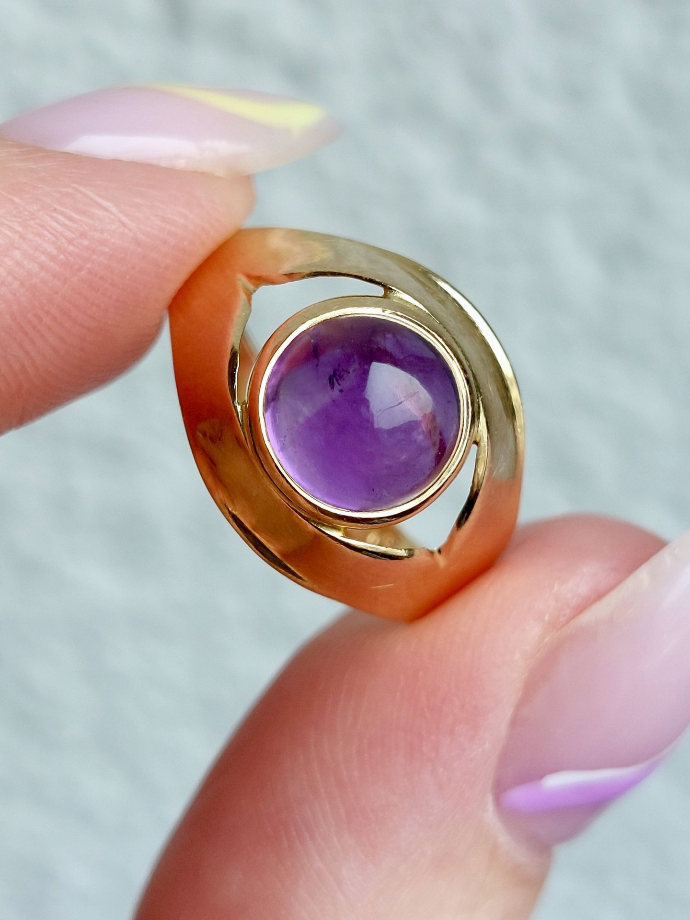
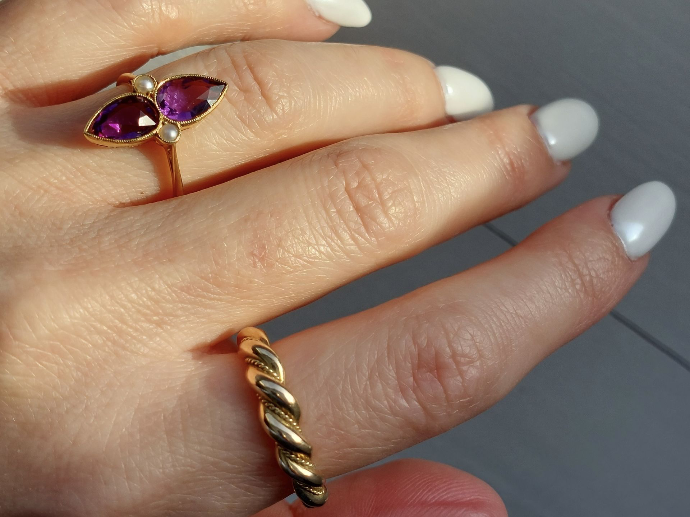
Amethyst is a variety of quartz containing iron, which gives it beautiful shades ranging from pale mauve to deep violet.
Αμέθυστος - Amethystos
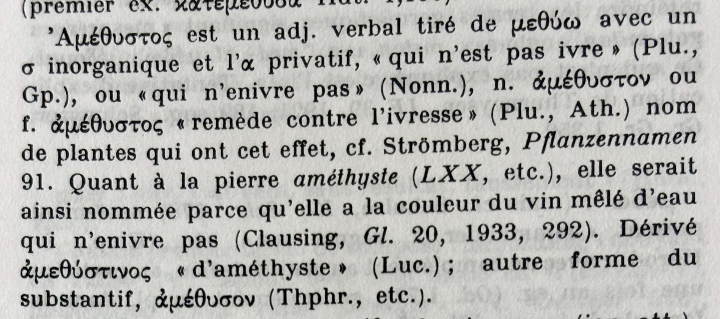
The Greek etymology of the word means "which protects against drunkenness", in reference to an ancient myth. "A-" is a privative prefix meaning "without", combined with the root "methè", which means "drunkenness".
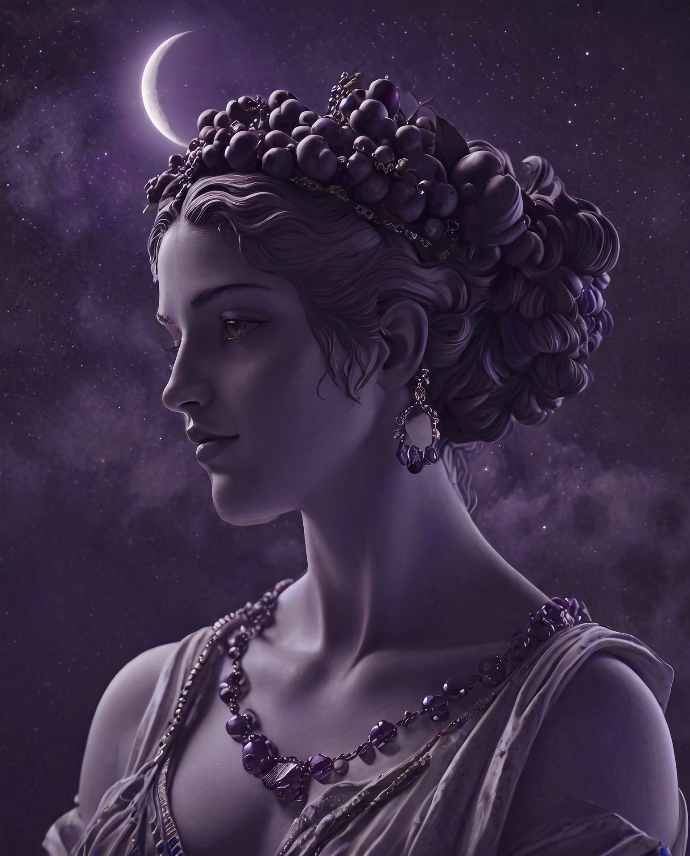
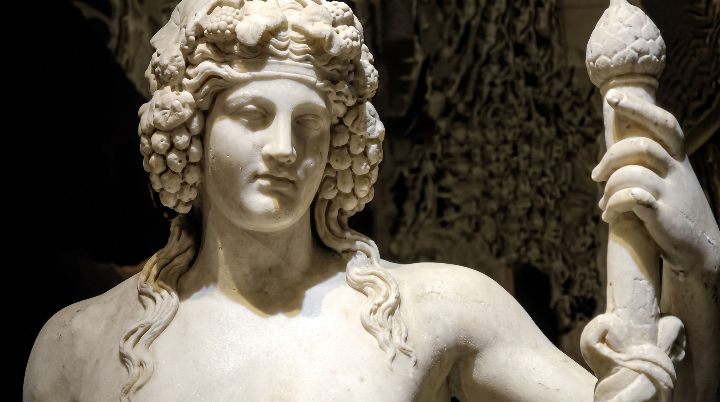
At the time of the Greco-Roman pantheon, Dionysus/Bacchus, the twirling god of the vine and wine, fell madly in love with Amethyst, a lovely young nymph. Far from sharing his passion, she fled from him in vain. The powerful virgin goddess Artemis/Diana heard her frightened plea. Immediate metamorphosis: Amethyst turned into a statue the colour of a clear moon. A saddened Dionysus stained her sculpture with wine-dreg tears. Our amethyst retains symbolic reflections of this: soothing calm and protection against destructive drunkenness.